Why Promoter Tracking Matters for Nightclubs
How digital promoter tracking boosts VIP revenue, cuts entry wait times, and turns one-time guests into repeat customers.

Nightclubs thrive on creating unforgettable experiences, and promoters are key players in making that happen. But without tracking, clubs risk operational chaos, lost revenue, and missed opportunities. Here's why promoter tracking is essential:
- Boost Revenue: VIP tables can bring in $1,000–$5,000 per night, often making up 80% of revenue. Tracking shows which promoters drive these high-value bookings.
- Improve Efficiency: Digital systems prevent double bookings, reduce entry wait times, and streamline operations.
- Enhance Guest Experience: Personalized service for VIPs - like remembering favorite tables or bottles - keeps high-spending guests coming back.
- Leverage Data: Tracking guest attendance and spending helps venues follow up with visitors, turning one-time guests into loyal customers.
Switching from outdated methods like paper lists to digital tools not only simplifies operations but also provides actionable insights to grow revenue and retain top promoters. Nightclubs that adopt these systems are better equipped to dominate the competitive nightlife scene.
1. Nightclubs Without Promoter Tracking
Operational Efficiency
When nightclubs skip promoter tracking, they often face logistical chaos. Relying on scattered text messages, paper lists, or outdated spreadsheets creates confusion at the door, leading to long lines and entry mistakes. Without a unified digital system, staff members - like promoters, hosts, servers, and security - struggle to coordinate effectively. This is why choosing a bookings system that integrates CRM and promoter tracking is essential for operational flow. The result? A disconnected service experience that feels unprofessional to guests.
A lack of real-time updates on table availability and bookings can lead to embarrassing situations like double-bookings or VIP tables sitting empty while other guests are turned away. Additionally, management misses out on key insights, such as identifying which promoters attract high-spending customers versus those who simply fill the guest list. This makes it tough to allocate marketing budgets wisely or create meaningful performance incentives. These inefficiencies don't just hurt operations - they directly affect revenue and guest satisfaction.
Revenue Impact
Without a proper tracking system, venues are left with incomplete POS reports that show transactions but fail to reveal the full picture of foot traffic. This creates a major blind spot: how do you staff appropriately when you don’t know how many people are actually in the building? A single payment can hide the true headcount, skewing metrics like cost-per-transaction and average spend per guest. As a result, venues frequently find themselves understaffed during peak hours, with drink wait times stretching from 30 to 60 minutes.
For venues that rely heavily on VIP table and bottle service - sometimes accounting for up to 80% of revenue - these issues are even more critical. A single VIP table can bring in significant revenue in one night. But without tracking which promoters are filling these tables, management lacks the data to fine-tune this crucial revenue stream.
Customer Experience
Operational gaps from poor tracking also hurt the guest experience, especially for VIPs. Without a system to track repeat guests and their preferences - like a favorite table or preferred bottle choice - servers can’t deliver the kind of personalized service that justifies premium pricing. Treating high-value VIP reservations the same as general admission not only diminishes the experience but also risks alienating your top spenders.
"VIP guests should be treated as valuable long-term relationships, not one-time transactions. Venues that don't track customer history... miss opportunities to increase lifetime customer value." - Ready Text
Data Utilization
Skipping promoter tracking also means missing out on valuable attendee data. Without a digital record of who attended an event, venues lose the ability to follow up with guests afterward. This is a big deal - about 70% of new guests won’t return on their own without proactive outreach. Without this data, venues miss the chance to turn one-time visitors into loyal customers and fail to build a CRM database that could help drive repeat visits from high-value guests. This oversight leaves a lot of potential revenue on the table.
sbb-itb-b384c58
2. Nightclubs With Promoter Tracking
When manual processes fall short, digital systems step in to bring accuracy and smooth coordination.
Operational Efficiency
Switching to digital promoter tracking can turn a chaotic entry process into a seamless one. Instead of flipping through paper lists, staff can find a guest in seconds by typing just a few letters of their name on an iPad. Promoters can also upload guest lists via SMS or bulk CSV files, which automatically sync with door staff devices. This eliminates the need for last-minute scrambling to consolidate lists.
Take CODA Nightclub in Toronto, for example. In 2015, they moved from paper to a digital platform to manage over 1,000 weekly attendees and numerous promoters. Their iPad-based system not only sped up check-ins but also provided instant reports on guest numbers and revenue generated by each promoter. This shift significantly reduced errors and improved efficiency. Similarly, Eventvibe in San Diego replaced an outdated manual system with digital tracking for events hosting up to 1,200 guests per night, allowing real-time promoter credit tracking.
Modern systems even include offline capabilities, syncing data once Wi-Fi is restored. This ensures operations run smoothly, even when connectivity issues arise. The shared visibility that digital systems provide enables a level of coordination that manual methods simply cannot match. These improvements don’t just streamline operations - they also open the door to higher revenue potential.
Revenue Impact
Accurate tracking ensures that revenue is properly attributed to the right promoters, avoiding any loss of income. Considering that VIP table and bottle service can account for as much as 80% of revenue at high-end nightclubs, it’s essential to know which promoters are driving these sales.
Digital systems offer instant performance reports, breaking down promoter contributions by guest demographics and revenue. This replaces hours of manual calculations and allows venues to make real-time decisions about promoter incentives, marketing budgets, and staffing levels based on actual attendance data.
Customer Experience
Long lines are a dealbreaker for many guests - 54% of them will leave if the wait is too long. Digital tracking helps reduce wait times at the door, directly improving attendance and revenue. These systems can even notify floor staff when VIP guests arrive, ensuring they skip the line and are seated at premium tables without delay.
For repeat VIP guests, digital platforms can integrate with CRM systems to store preferences, like favorite tables or bottle choices. This allows servers to provide a personalized experience that justifies premium pricing. With about 20% of hospitality profits coming from regulars, this kind of tailored service is key to keeping them coming back.
Data Utilization
Every digital check-in creates a record of guest attendance and promoter attribution. This data is invaluable for post-event marketing. Since 70% of new guests may not return without follow-up, venues can use this information to segment their outreach based on spending habits, demographics, and promoter connections. Building a strong CRM database from these insights helps venues drive repeat visits from their most valuable customers.
Platforms like DQ: The System for Bottle Service bring all these tracking features together in one easy-to-use solution. They enhance operational efficiency and provide actionable insights, helping nightclubs deliver a better experience while boosting their bottom line.
Pros and Cons
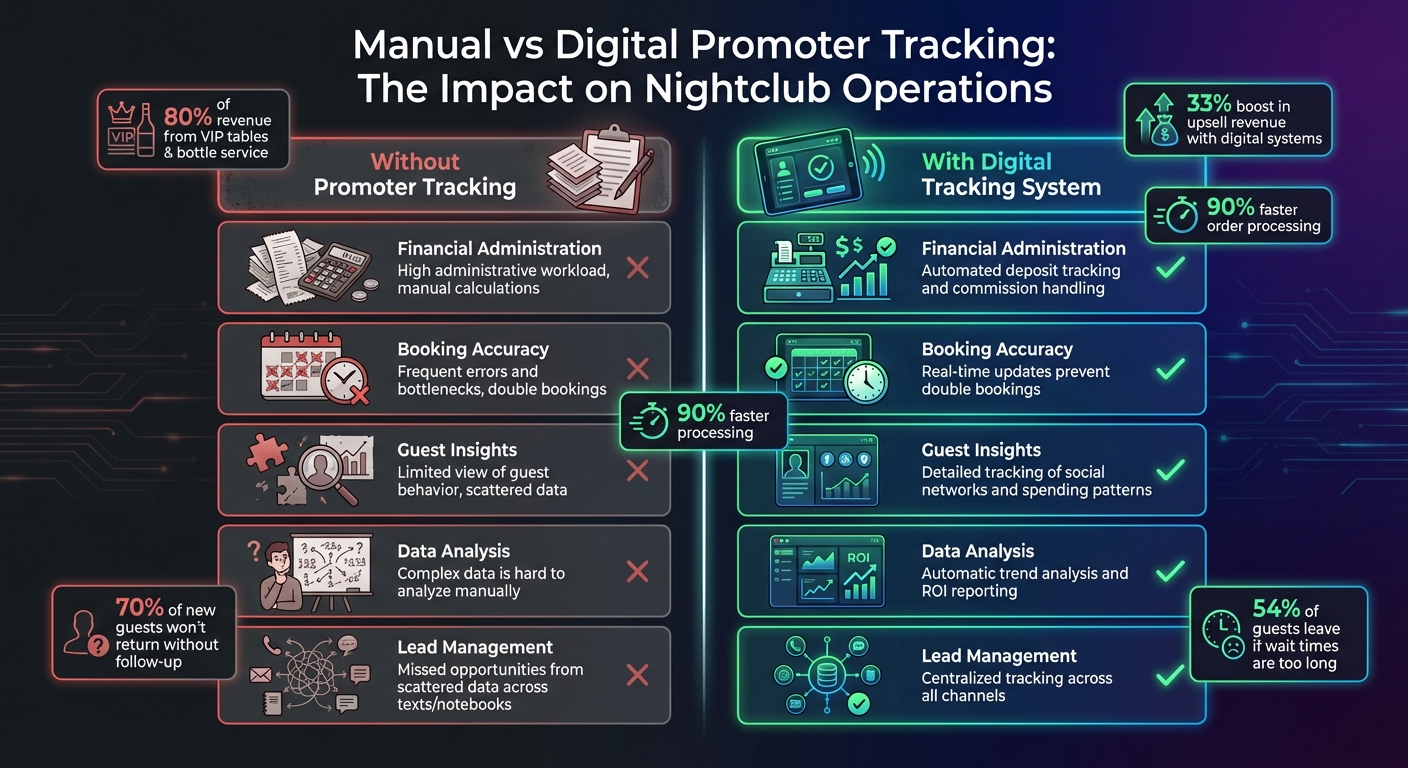
Nightclub Promoter Tracking: Manual vs Digital Systems Comparison
Deciding between manual methods and digital tracking comes down to weighing factors like time, cost, and opportunity.
When venues stick to paper lists and spreadsheets, they face a mountain of end-of-night tasks - handling commissions, deposits, and revenue attribution. These methods lack real-time visibility, often leading to double bookings. Plus, guest data scattered across texts and notebooks makes it nearly impossible to identify trends or pinpoint which promoters bring in high-value customers. Eric, the owner of Trio Charlotte & Trio Charleston, shared his experience:
"It's not just about tracking sales - it's helped us recruit and retain promoters who genuinely believe in the brand... The platform brings awareness to our events, fills the room earlier, and creates a sense of healthy competition."
On the other hand, digital promoter tracking simplifies these challenges. Automated systems handle deposit tracking and commission calculations, cutting out hours of post-event paperwork. They also capture guest spending data and social connections, offering insights manual methods can't match. For example, platforms designed for this purpose can boost upsell revenue by 33% and speed up order processing by 90%.
These operational upgrades directly impact revenue and customer satisfaction. Here's a breakdown of how the two approaches compare:
| Feature/Outcome | Without Promoter Tracking | With Promoter Tracking System |
|---|---|---|
| Financial Admin | High administrative workload | Automated deposit tracking and commission handling |
| Booking Accuracy | Frequent errors and bottlenecks | Real-time updates prevent double bookings |
| Guest Insights | Limited view of guest behavior | Detailed tracking of social networks and spending |
| Data Synthesis | Complex data is hard to analyze | Automatic trend analysis and ROI reporting |
| Lead Management | Missed opportunities from scattered data | Centralized tracking across all channels |
While digital systems require upfront investment in software and training, they come with potential challenges like survey fatigue or misinterpreted data. Still, for nightclubs managing multiple promoters and large guest volumes, the increased efficiency and revenue potential often outweigh these concerns. By focusing on the right metrics, venues can enhance promoter performance and drive profitability.
Key Metrics in Promoter Tracking for Revenue and Efficiency
Success in the nightclub industry often comes down to the metrics you track. Promoter tracking highlights three major categories: promoter output, guest quality, and marketing ROI.
Promoter output metrics focus on factors like guest list turnout, secured table bookings, and bottle service commissions. These numbers help identify promoters who excel at driving VIP bookings versus those who boost general attendance. Considering that VIP table and bottle service can account for as much as 80% of revenue in high-end nightclubs, keeping a close eye on these metrics is crucial. They offer actionable insights to enhance both revenue streams and operational efficiency.
When it comes to assessing guest quality, metrics such as revenue per guest, demographics, and repeat visit frequency come into play. This data helps pinpoint high-value patrons - often individuals over 30 with higher disposable income - versus guests primarily drawn by discounts. For instance, one hospitality group managed to save $86,000 in third-party commission fees over four months by utilizing direct management software for guest tracking and bookings. Another venue saw an additional $44,000 in revenue over seven months by using automated email marketing tailored to guest data.
Lastly, marketing ROI metrics like Guest Acquisition Cost (GAC) and redemption rates shed light on which promoter campaigns are truly profitable. Joe Friedman, Director of Marketing Partnerships at TAO GROUP, emphasized the importance of leveraging data:
"Our integration with a dedicated system has enabled us to capture detailed guest data, helping us build proactive loyalty and marketing strategies".
These metrics not only help refine promoter strategies but also ensure that marketing efforts deliver measurable results.
Conclusion
Nightclubs that embrace precise promoter tracking consistently gain an edge over their competitors. With 64% of independent venues struggling to stay profitable in 2025, accurately linking sales to promoters is more than just helpful - it’s critical. This accuracy ensures fair compensation, resolves disputes, and helps clubs make smarter investments.
Digital tracking tools make it possible to identify which promoters drive VIP bookings, allowing management to reward top performers and address any commission disagreements. As Stephen Parker, Executive Director of the National Independent Venue Association, succinctly put it:
"Alcohol sales are how you make money."
By adopting digital-first approaches, venues can collect customer data even before guests arrive. Integrated dashboards that combine guest lists, real-time capacity updates, and spend data enable more informed, revenue-driven strategies. This is especially crucial for bottle service–focused venues. Tools like DQ: The System for Bottle Service (https://getdqd.com) simplify VIP booking management, commission tracking, and data analysis, making operations smoother and more profitable.
For venues still relying on outdated methods, the path forward is clear: use unique tracking links for every promoter and artist, sync this data with your POS system, and leverage the insights to base decisions on verified ROI instead of guesswork. The venues already doing this aren’t just staying afloat - they’re dominating the premium VIP market that drives their success.
FAQs
What should I track for each promoter?
Tracking key metrics is essential for understanding the impact of your promoters and refining your strategies. Focus on figures like attendance rates, revenue generated, and the number of VIP bookings or guest list contributions. Dive deeper by analyzing how many guests each promoter attracts, their spending patterns, and the overall quality of the crowd they bring in.
Post-event data is just as important. Look at metrics like sales driven by promoters and guest engagement levels to assess performance. Keeping a close eye on these numbers helps you make smarter decisions, fine-tune promotional efforts, and ultimately boost both revenue and guest satisfaction.
How do I connect promoter tracking to my POS?
Connecting promoter tracking to your POS can simplify your operations and help increase revenue. To get started, consider using a platform like DQ to centralize both promoter and guest information. Pair this with your POS system through compatible software or APIs to allow real-time tracking of sales and bookings. Make sure your POS supports promoter codes, so you can directly associate sales with individual promoters. This setup not only streamlines management but also provides better performance insights.
How do I start promoter tracking without disrupting the door?
To kick off promoter tracking efficiently, adopt a system that provides real-time insights into promoter performance and attendance. Tools like automated guest lists and digital check-ins can simplify entry processes and help avoid unnecessary delays. By centralizing guest data and establishing clear performance benchmarks, you can measure results more effectively. This strategy allows you to keep tabs on promoter activities without disrupting door operations or negatively affecting the guest experience.